Spring is Here!
I wanted to share some "Spring Reminders" with you that may help with some common problems that many cut flower growers face.

#1 - Weed prevention is a lot less expensive than weed eradication.
Put simply, it's best to never let the weeds get started. Or at least deal with them when they have just sprouted. Here are some of the many ways to deal with weeds:
Tarping - Tarping is where you cover existing weeds or bare ground with silage tarps and only uncover the areas that you will be planting, just before planting.
Flame Weeding - Flame weeding is useful on areas that have been prepped for planting, but before plugs are planted. Basically you use a flame weeder to heat the newly sprouted weed seedlings to kill them just before planting. This can also work with direct sown seeds that are covered with soil when planting. You can flame weed until the flower seeds germinate and break the surface.
Plastic Mulch - Plastic mulch is available in traditional "plastic" film and also in biodegradable film that degrades over time and is usually worked into the soil at the end of the season. Plastic mulch requires good bed prep that starts with a smooth, weed-free surface.
Landscape Fabric - Woven landscape fabric is a reusable weed barrier that lasts for years. It is also good to use with woody shrubs and perennials that don't spread by runners. (Baptisia and Peonies=Yes. Mountain Mint and Solomons Seal=No)
Hoeing - Hand hoeing young weeds as soon as the sprout works great. If you plan to hoe weeds, it's easiest if the plants are in rows so you can hoe with long, straight passes of the hoe, instead of a short chopping motion.
Mulching - Any type of mulch can help prevent weeds. Options include heavy paper, cardboard, shredded mulch, grass clippings, well aged compost, shredded leaves, and more. The best mulch is a free mulch. Landscape companies are usually happy to drop off leaves and grass clippings for free. Just make sure the grass isn't contaminated with weed killer. Your flowers are "weeds" to lawn weed killers.
Soil Sterilization - The best soil sterilization is done with equipment that injects hot steam into the soil, basically killing all seeds and pathogens. It may also the "good" stuff in your soil. Steam sterilization is usually rese4rved for in tunnels and greenhouses. Low-tech soil sterilization can also be accomplished by covering the area with clear plastic and allowing the sun to heat the soil to 108°F for 4-6 weeks.
Chemical Weed Control - There are many chemical options that eliminate weeds in various ways. Some kill only the part of the plant the product touches. Some kill the entire plant, roots and all. And some prevent seeds from sprouting in the first place. If you decide to use chemicals, be sure to read the label completely. Then read it again just to make sure it will work as expected on cut flowers. Remember that your cut flowers may be a weed to many chemicals designated for weed control.
# 2 - Heat build-up in high tunnels and greenhouses.
If you are growing flowers like ranunculus, anemone, stock, tulips, and other "cool" crops, make sure you vent your tunnels and greenhouses. Just one day of extreme heat on a sunny, or even partly sunny, day can trigger the plants to go dormant, or bloom out faster than they can be picked. With most cool crops, once the night temps are above freezing, tunnels and greenhouses can be open and vented 24/7, closing them only if them nighttime temps go below freezing. It's also helpful to make sure you are watering with cool water. Water early in the day, or flush out the header lines or hoses if if the sun has warmed the water in them.
#3 - I like to throw in a reminder that you will never make any money growing cut flowers.
All the money is in selling cut flowers. So work just as hard on marketing and selling as you do on growing your cut flowers.
#4 - Have your planting beds ready for planting before the plug and liner orders start to arrive.
Plugs and liners should be planted within a few days of them arriving. If you are pressed for time, make Lisianthus and Celosia a priority to get them in the ground a.s.a.p. Both of these can have devastating effects if they are held in the plug tray too long and begin to get root bound. The Lisianthus may form a rosette and not grow, basically saying "I'm not happy with the way things are, I'll sit here until next year". The Celosia may set buds and try to bloom very short because it feels like it's not going to survive and it needs to make flower and seeds.
#5 - Water!
Be sure to water any plugs and liners upon arrival. And just as important, hand water them for 2-4 weeks after planting to make sure they have rooted in and have started to grow. The little root ball on plugs can dry out fast and the plant may die if you don't hand water daily. On hot sunny days, water several times a day if needed.
#6 - It's not too late.
If you forgot to order some plugs or liners, or just need some "fill-in" plants, here are highlights of some of the excess Cut Flower Plug and Liner Availability from the many growers in the Ball April assortment. Note: This does not include perennial bare root and liner material from our multiple growers. If you have a perennial need, you can search WebTrack or contact your Ball rep or the ColorLink office for assistance.
- Ball Tagawa: SNAPDRAGONS, lisianthus, marigold, eucalyptus
- Cal Seedling: Lavender, Lisianthus, Snapdragons
- Gro N’ Sell: Bells of Ireland, Dianthus, Digitalis, eucalyptus , helichrysum, lisianthus, herbs Headstart: Snapdragons
- Kubepak: Celosia, Lisianthus, Eucalyptus, Zinnia, delphinium, Herbs, ptilotus
- Raker: Split 72-cell items of celosia, delphinium, gomphrena, lisianthus, Limonium, snapdragons, delphinium, herbs, rudbeckia & more!

And I know it may seem like its too early to start thinking about bulbs for planting this fall, but it's a good idea to place orders soon after the spring bulbs have bloomed when your memory is fresh about what worked, what sold, and what changes you'll want to make for the next season.
Prices may not be available yet from all out fall bulb suppliers, but you can place orders now, and make any needed adjustments after prices are added.
We have three main bulb suppliers.
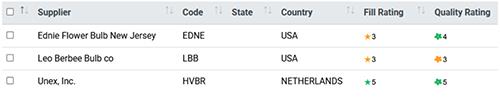
Be sure to check out each supplier when placing your order. Each offers a different selection of bulbs, minimum per variety, and order minimums. Prices may vary from one supplier to the next.