Let’s continue the conversation about water quality and elevated EC by covering blending water with non-RO sources.
PROBLEM: Reducing the EC of your water can lead to a number of benefits. Last week, I covered how installing a reverse osmosis (RO) system can be a solution. But that’s not always an option.
NICK’S TIP: Blending your water with another non-RO source is another way to reduce EC if your water tends to run on the “salty side.”
Sometimes when you build a greenhouse, municipal water is not available. However, utility infrastructure changes over time as municipalities grow, so it may become an option for you.
While there is often an upfront cost associated with doing this, getting a “city water” hookup can enable you to quickly and reliably lower irrigation water EC. Much like with an RO system, you can blend city water with your well water or switch over to the municipal source entirely. City water undoubtedly costs more than pumping water from your own well but it is frequently less costly than installing and maintaining a RO system.
As a bonus, many municipalities provide periodic water test readouts (either at standard intervals or upon request), which can help you to make better water quality management decisions over time.
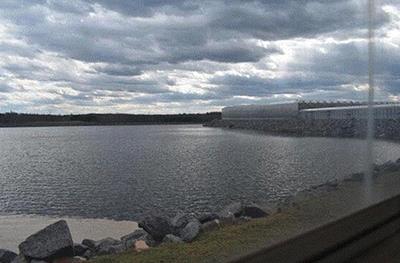
If a municipal water hookup is not an option, you may want to consider installation of a retention pond or series of ponds. Ponds can be used to catch clean rainwater and roof runoff from greenhouse glazing. Rainwater is typically quite pure and naturally low in alkalinity and soluble salts. This water can either be blended with well water or used as-is to irrigate crops.
If you want to go a step further, you can convert your operation to a “closed irrigation” system, where all the leachate from your greenhouses drains into pond(s) for remediation and recirculation. This does add another layer of complexity to your irrigation/fertigation strategy, because you need to monitor nutrient level changes in your pond(s) over time, but can be a very cost-effective and resource-conscious strategy in the long-term.
With a pond system, you need to install a pumping system and filter incoming water to keep sediment out of your irrigation lines. It’s also highly advisable to integrate some form of water treatment system for pathogens and algae and a tempering system to ensure water isn’t super cold during the early part of spring. Keep in mind that collection of other surface runoff (ex. paved areas, stormwater runoff) is generally not advisable, because it introduces a whole new set of potential contaminants to your pond system like oil and gasoline, or waterborne/soilborne pathogens from offsite.
Depending upon the size of your pond project, there can be substantial upfront cost of implementation. However, depending on your location, there may be local, state and/or federal grants that can help to offset the cost. Reach out to your local university extension office and conservation district to find out what other resources are available to you.
A few weeks ago, we said we’d cover nutrient imbalances and some occasional oddball water quality concerns. But first, we wanted to touch on the general issue of elevated EC. To kick off 2026, we’ll actually discuss common nutrient-specific issues and how to remedy them.